

Okay, so check this out—I’ve been fiddling with browser extension wallets for years, and somethin’ about Rabby kept pulling me back. Wow! The first time I opened it I thought it was just another wallet. But then: smoother UX, clearer approvals, and surprisingly sensible multi-chain support. Initially I thought it would be one of those flashy tools with little substance, but actually, wait—Rabby nails a few real-world problems that other extensions gloss over.
My instinct said “this could save time” and that turned out to be true. Seriously? Yep. There are features here that cut down repetitive clicks and reduce accidental approvals—things that, if you’re active in DeFi, become very very important. On one hand it’s lightweight and focused; on the other, it adds several safety guardrails that larger wallets don’t emphasize.
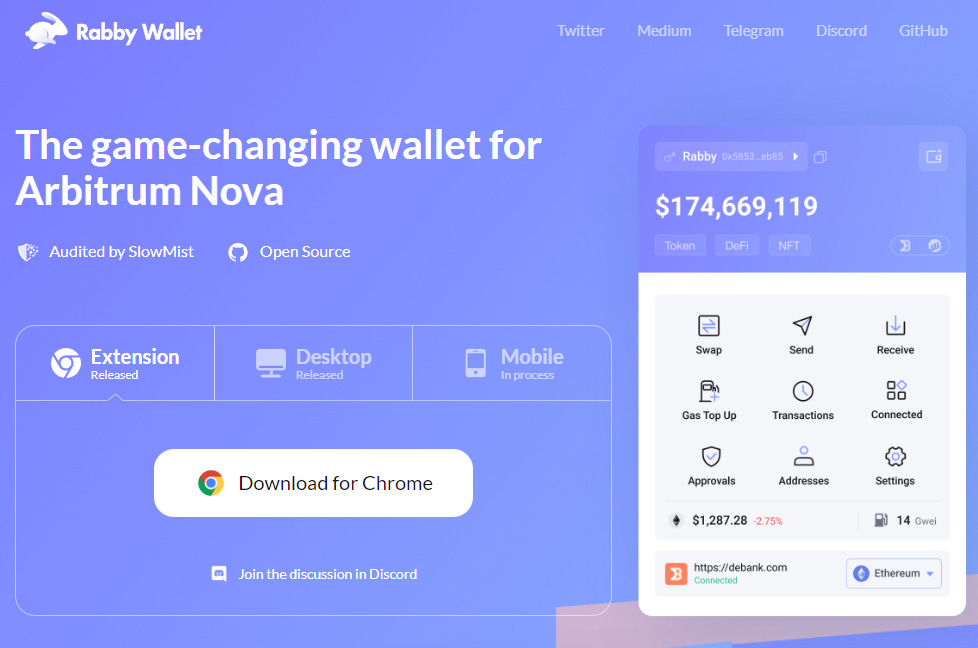
What makes Rabby stand out
Here’s the short version: it’s built for people who hop chains. Hmm… it remembers network contexts, isolates approvals, and surfaces the important stuff when you’re signing. That sounds small, but in practice it changes behavior. For example, Rabby’s gas and token info in the approval modal is clearer than a lot of competitors—so you catch sneaky token approvals earlier. My gut feeling was right: cleaner prompts reduce dumb mistakes.
On a technical level Rabby supports EVM chains well, and it handles chain switching in a way that feels intentional rather than janky. The extension lets you group accounts, name them, and keep a neat separation—so you can keep a “trading” account and a “savings” account without mixing them up. I’m biased toward tools that help me think slower when money is involved, and Rabby does that.
Download and set up — quick practical steps
If you want to try it, grab the extension from the official source—searching carefully matters, this is one place you shouldn’t copy-paste a random link. For convenience, here’s the official spot: rabby. Follow the prompts to create or import a wallet, and make sure you back up your seed phrase offline. Seriously—write it down, multiple copies, different locations. No cloud notes.
Once installed, spend 10 minutes in Settings. Tweak the default currency, add the chains you use, and enable the transaction preview tools. Those previews are where Rabby shines. They parse approval scopes, show estimated fees, and let you preview contract calls. I like that it forces a pause—so I read the request before hitting “confirm”.
How Rabby handles multi-chain operations
Multi-chain is more than having a dropdown. Rabby keeps network metadata straight, and it isolates approvals by origin and chain so cross-chain scams are less likely to surprise you. There’s also a built-in dApp compatibility mode that reduces annoying popups when a site tries to switch networks without consent. That small respect for user flow is something I don’t see enough.
On the flip side, it’s not perfect. Some niche chains need manual RPC info, and sometimes tokens don’t auto-detect. You’ll have to add a few things yourself. But once configured, the experience is consistently pleasant—transactions are clear, and queueing makes sense.
Security posture — realistic expectations
I’ll be honest: no browser extension is as secure as a cold wallet. If you’re holding large sums, move them offline. That said, Rabby does a few things that reduce common mistakes. It highlights token approvals that would allow token transfer, shows spend limits, and surfaces contract addresses earlier in the flow. Those small nudges prevent several phishing-style errors I see people make.
Initially I thought these were mere UI niceties, but after watching a friend almost sign a malicious approval, I appreciated them more. On one hand they are not foolproof. Though actually, they make social-engineering attacks harder because there’s less ambiguity during signing.
UX quirks and what bugs me
Okay—here’s what bugs me about some extension wallets in general: they try to be everything. Rabby resists that a bit, which I like. Still, a couple of rough edges remain. Token search can be slow. Sometimes the gas estimation is conservative in a way that costs extra, and that annoyed me when I was in a hurry. But those are trade-offs: better safe than sorry, right?
Also, the first-run experience could spell out the security model more clearly. A short walkthrough that explains approvals, phishing detection cues, and how to use a watch-only account would be very helpful. Oh, and by the way… if you frequently use hardware wallets, make sure yours is supported and tested—don’t just assume it works.
Tips from real usage
Some practical rules I’ve followed while using Rabby and other wallets:
- Use separate accounts for trading vs long-term holdings.
- Double-check contract addresses in the approval modal—copy from a trusted source.
- Limit token approvals where possible; revoke unused allowances.
- Keep a small “active” balance in the browser wallet and store the rest in a cold wallet.
These habits matter more than a bells-and-whistles feature. A polished UX helps enforce them, but you still need the discipline.
FAQ
Is Rabby safe for daily DeFi interactions?
For routine DeFi use, Rabby provides sensible protections and a clear transaction UI that reduce mistakes. It’s suitable for everyday trades and interactions, especially if you follow good practices like using separate accounts and backing up seeds. But for large long-term holdings, prefer a hardware or cold wallet.
Does Rabby support all chains I might need?
Rabby covers many EVM chains out of the box, and you can add custom RPCs. Some less common chains may need manual setup. If you rely on a niche chain, test small transactions first.
So yeah—if you use multiple chains and you want an extension that nudges you toward safer behavior without being intrusive, Rabby is worth trying. My take: it’s pragmatic, not flashy. I’m not 100% sure it will replace every wallet in your workflow, but it will probably earn a spot in it. Try it for a week with small amounts. See how it changes your habits. And, uh, please, for the love of stablecoins, back up that seed phrase and don’t reuse passwords… this stuff matters more than the latest token hype.